
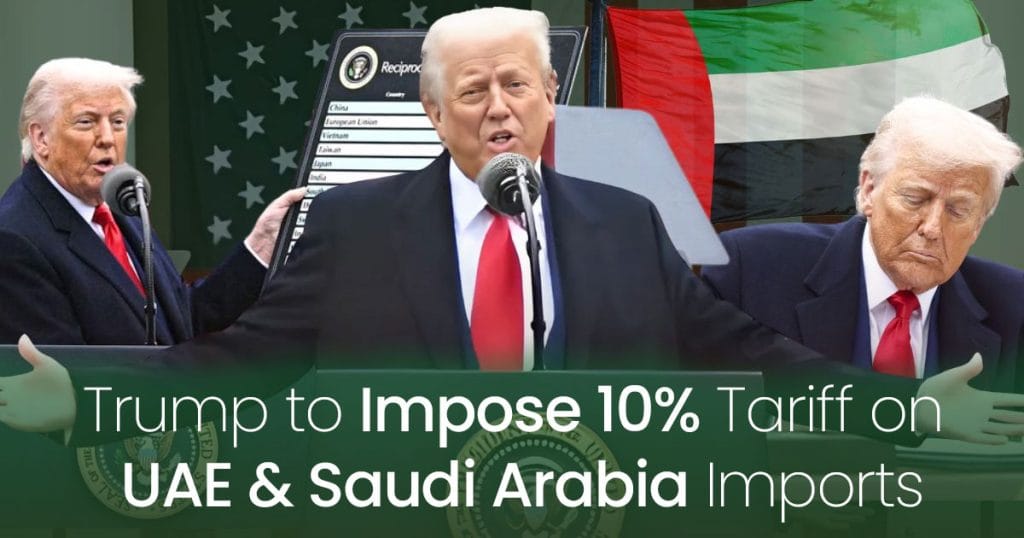
Trump to Impose 10% Tariff on UAE and Saudi Arabia Imports
ترامب يفرض رسومًا جمركية بنسبة 10% على واردات الإمارات والسعودية “كارثة” على التجارة
US has imposed a 10% tariff on exports from the United Arab Emirates and Saudi Arabia. This new tariff by US President Donald Trump will impact dozens of countries that are exporting to the US.
Table of Contents

US Reciprocal Tariffs on UAE and Saudi Arabia | التعريفات الجمركية المتبادلة بين الولايات المتحدة ودولة الإمارات العربية المتحدة
This sudden move with higher reciprocal taxes will affect multiple countries such as China, Japan, India, and several European countries.
10% Trade tariff on the United Arab Emirates (UAE) and Saudi Arabia will take effect on April 5, 2025. Higher reciprocal tariffs will be imposed on April 9, 2025 – referred to as “Liberation Day.”
Pakistan will face a 29% tariff, India will face a 26% tariff, the Philippines will face a 17% tariff, Japan will face a 24% tariff, China will face a 34% tariff, and Cambodia will face the highest tariff of 49%.
Trump described the reciprocal tariffs: This new tariff would help create more in-house manufacturing businesses and lead to more manufacturing jobs at home. He further emphasized that this approach will reduce dependency on foreign production, ultimately strengthening the United States economy and promoting domestic growth.
Frequently Asked Questions (FAQ)
President Donald Trump has announced a 10% tariff on imports from the United Arab Emirates (UAE) and Saudi Arabia, effective April 5, 2025.
According to Trump, the new tariffs aim to boost domestic manufacturing, reduce dependency on foreign goods, and create more American jobs.
Yes. In addition to the UAE and Saudi Arabia, other countries like China, Japan, India, Pakistan, and European nations will also face increased reciprocal tariffs starting April 9, 2025, referred to as “Liberation Day.”
Reciprocal tariffs are retaliatory taxes imposed by the US in response to what it considers unfair trade practices. These tariffs can significantly increase the cost of imports from the affected countries, disrupting international trade relations.
Pakistan: 29%
India: 26%
Philippines: 17%
Japan: 24%
China: 34%
Cambodia: 49% (highest)
Businesses exporting to the US from the UAE and Saudi Arabia are likely to face rising costs, reduced competitiveness, and potential declines in export volume due to the added tariff burden.
The White House has not yet clarified whether these tariffs are permanent or temporary. Much will depend on economic results, political responses, and possible negotiations with the affected countries.
